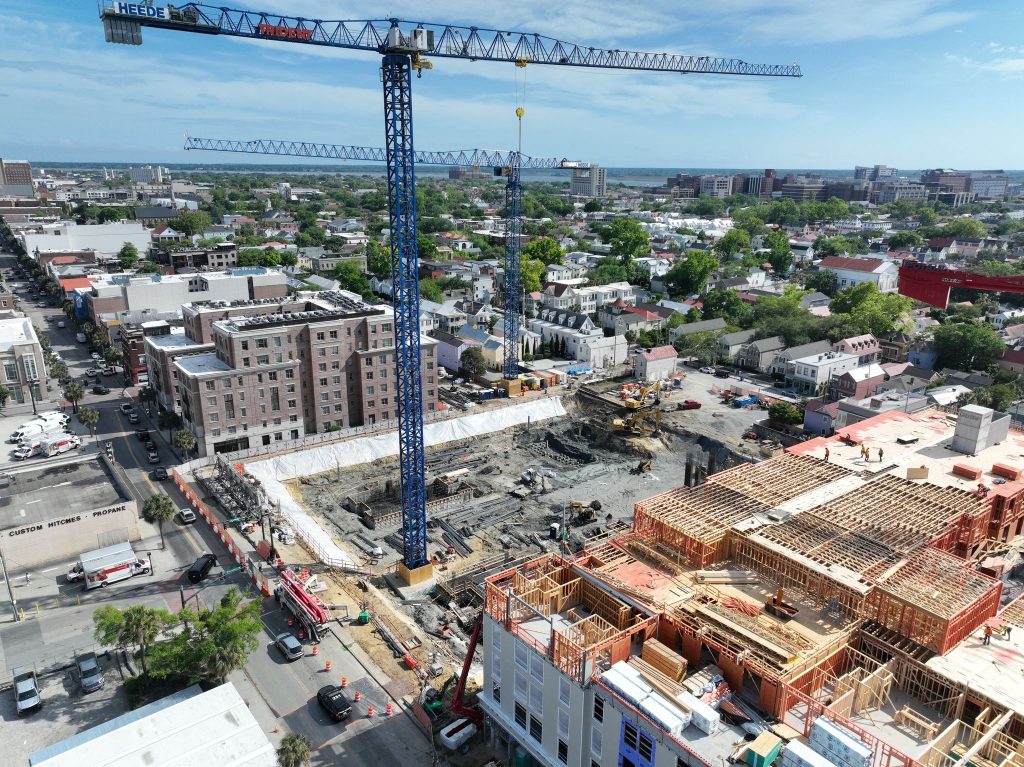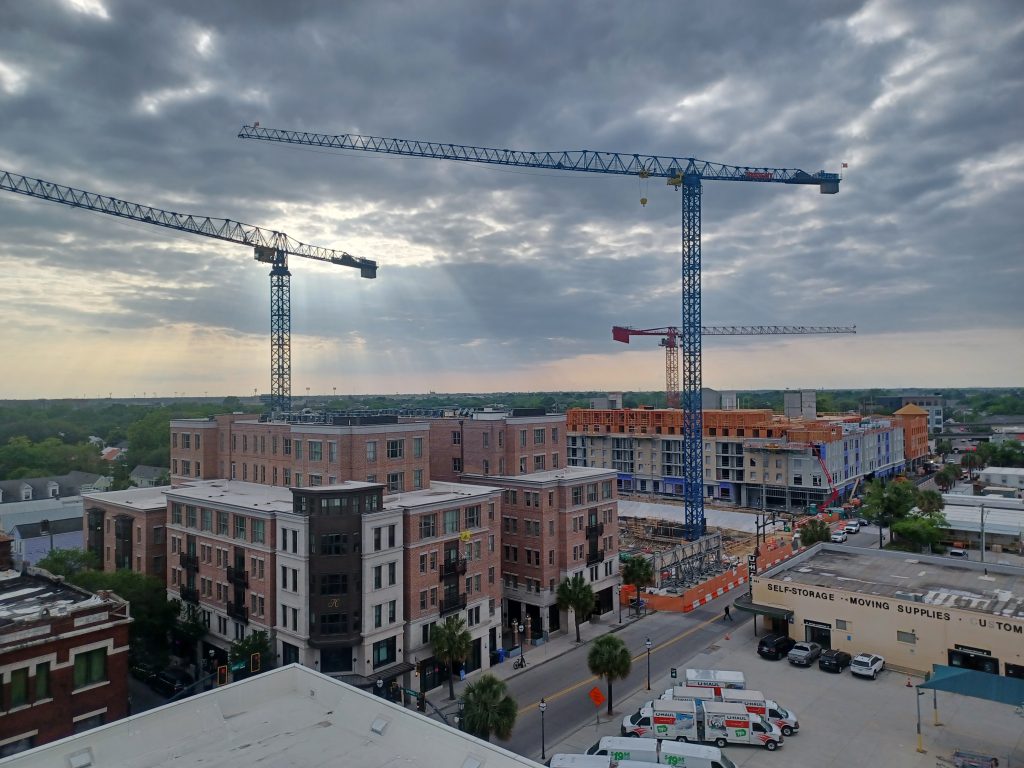
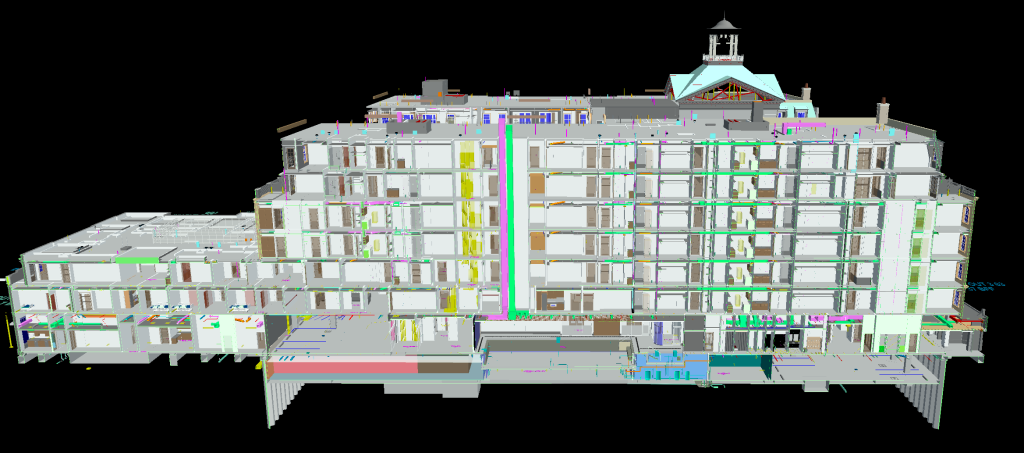
The Peninsula Senior Living Facility in Charleston, South Carolina is one of the most ambitious Building Information Modeling coordination efforts currently underway for the AMP team. Working alongside Trident Construction, AMP is providing full building construction coordination for the 480,000-square-foot, four-phase mixed-use development, which will ultimately deliver luxury apartments, condominiums, and a senior living facility within a new modern structure set carefully into Charleston’s historic district. AMP’s role extends far beyond running clash reports — the team is virtually building the project in its entirety, coordinating all major trades, managing issue resolution, and serving as a central technology-driven partner throughout the life of construction. This type of BIM/VDC coordination is exactly what AMP was built to do: using advanced modeling to identify constructability issues early, reduce risk, and keep large-scale projects moving efficiently from design into reality.
What makes Peninsula especially notable is the sheer complexity behind the scenes. After nearly four years of involvement — including roughly three years in preconstruction, months of intensive preconstruction coordination, and now active construction coordination — the project has evolved into a massive collaborative effort involving roughly 20 to 30 coordinators across AMP, Trident, and multiple subcontractors. AMP is utilizing both Revizto and Autodesk Construction Cloud Build to function as a virtual project management hub: Revizto for clash detection, issue assignment, and real-time collaboration, and ACC Build as the master repository for drawings, documentation, and design information. Introducing this technology to partners who were not previously familiar with the workflow has been a project in itself, requiring AMP not only to coordinate the building, but to elevate the entire team’s digital construction process in pursuit of faster, smarter decision-making.
The biggest challenges have come from coordinating a modern, high-density structure on an extremely constrained city block layered over more than a century of existing underground infrastructure, all while preserving and repositioning a historic portion of the original building to satisfy Charleston’s preservation requirements. Every system adjustment impacts multiple trades, and every square foot must be maximized. Add in the project’s use of large prefabricated exterior wall systems — a delivery method more common to the coastal climate than traditional Northeast construction — and the coordination demands become even more substantial. For Trident, this is a project nearly fifteen times larger than previous collaborations with AMP, making AMP’s construction-first understanding of how to actually build a project of this scale an exponentially valuable resource. More than just a BIM consultant, AMP has become a vital extension of the construction team, helping solve problems before they reach the field and ensuring the path remains clear toward the project’s anticipated 2028 completion.
Click here for recent drone footage of the project.